Naked Rambler of the 19th-C. Andes

He assumed several names.
He rambled over many nations, nude whenever possible.
He set up schools wherever he went.
And he was the tutor of Simón Bolívar, the famous South American Libertador.

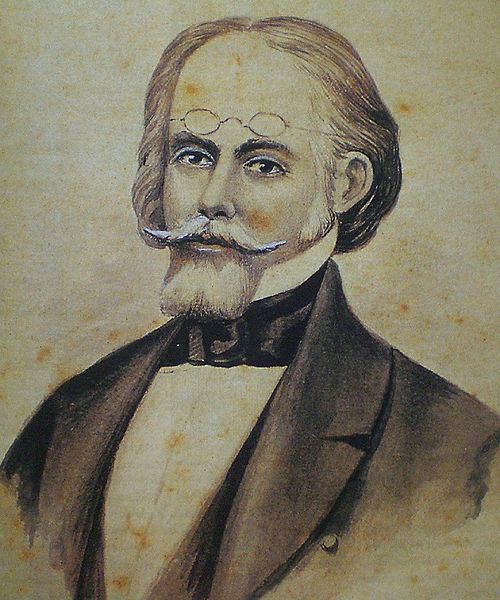
Portrait of Simón Rodríguez, Gabriel D´Empaire

Simón Carreño was born and orphaned in Spanish colonial Caracas, Venezuela in 1769. In his teens he changed his surname to Rodríguez, after the priest who became his surrogate father. In his twenties he was already publishing tracts on education reform. Involved in an early, failed attempt to win independence from Spain, he was forced into exile in 1797. He fled to Jamaica, where he began using the alias Samuel Robinson, and moved on to the United States and then to Europe, where he traveled and lived for more than twenty years in a half-dozen countries (Italy, Russia, France, Prussia, Germany, and Poland). In Italy, Rodríguez and his ward Simón Bolívar witnessed the coronation of Napoleon Bonaparte, a decisive moment in strengthening Bolívar’s determination to fight for Venezuelan independence from Spain.

After returning to the Americas in 1823, Rodríguez held a series of education posts in Colombia, Ecuador, Peru, and Bolivia, but fell out of favor for his pedagogical innovations:

(1) teaching girls as well as boys, of all races and classes, in mixed company;
(2) teaching with games, projects, and dialogue instead of rote learning; 
(3) teaching local languages such as Quechua and Aymara instead of Latin and Greek;
(4) teaching carpentry and masonry instead of theology;
–and, of greatest interest to nudists–
(5) teaching anatomy and medicine using live nude models, often Rodríguez himself.

These practices were regarded as heresy by the Catholic church and as little less than treason by the governments of the newly formed Spanish American nations, which explains the difficulty he had in holding a job. But his methods also show he was way ahead of his time.

Shortly after one of his live nude anatomy classes, there was an earthquake, and it was immediately attributed by the locals to the wrath of God provoked by Rodríguez’s lack of shame! Apparently God also disliked Rodríguez’s habit of siring children wherever he rambled – children he would not name according to the Catholic saints’ days but rather according to what was in season: Squash, Carrot, Potato, and several other cultivars of earthy produce!

In the final years of his long and adventurous life, he became an itinerant tutor, wandering from town to town in the Andean valleys wearing little other than the rucksack that contained his prolific handwritten texts. Most of his quirky writing, in which he favored alternative spellings and the use of aphoristic equations, is gathered in Sociedades americanas (American Societies), published in four volumes in as many different cities over the period of 1828-1842. Many dismissed him as un loco, but he retorted that his accusers were ciegos – blind to the realities and necessities around them. He died in Peru in 1854.

Though today he is little known outside Venezuela (where his image appears on the 50 bolívar bill, among many other places), Rodríguez was an important pedagogical reformer whose work, in part, set the stage for later Latin American innovators of education such as José Vasconcelos, Paulo Freire, Gabriela Mistral, Augusto Boal, and Sonya Rendón. Several rich anecdotes from Rodríguez’s life can be found in the second volume of Eduardo Galeano’s pageant of Latin America, Memory of Fire, and a novelized biography of Rodríguez, La isla de Róbinson, was written by Arturo Uslar Pietri.

Simón Rodríguez stands alongside Benjamin Franklin, Henry David Thoreau, and other pioneers of naturism who lived prior to the start of the organized movement in early twentieth-century Germany. I’d like to see more interest from naturist groups, especially but not only in Latin America, in the life and work of this firebrand and indefatigable gadfly Simón Carreño / Simón Rodríguez / Samuel Robinson.

Naked Santa Cyclist

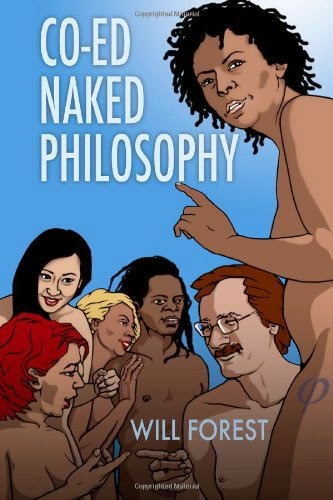
Happy December! It was around this time some years ago that an interesting cyclist began circulating the city streets where I live. He was such an attention-grabbing character that he rode off the streets and right into my novel, Co-ed Naked Philosophy. Here’s part of a passage from the novel featuring the Naked Santa Cyclist:

Dr. Tabitha Lasseter-Peebles, her pressed outfits hanging from the hook inside the backseat passenger’s door, pulled out of the drycleaner’s parking lot into traffic. A crimson flash caught her eye as she drove through the intersection. 
Was that Santa Claus? On a bicycle?
 
But he had no beard, no belly…A clean-shaven man, maybe East Asian or Native American, middle-aged, his wide-open Santa jacket flapping in the wind, rode along bare-chested in red pants and black boots, with a cardboard sign attached to the back of the bicycle seat: WILL SING NAKED 4 $1. He waved and smiled through the rush-hour traffic, weaving through the buses as they pulled away from the curb in front of the high school. She lost sight of him for a few hundred yards as she advanced toward the next stoplight, only to see him again in her rearview mirror as he pedaled determinedly up the hill. Sweaty Santa. Stinky, sleazy Santa. Other drivers whistled or shouted while teenage pedestrians repeated the words on the sign over their cell phones. But no one stopped him to sing. 
Tabitha chuckled in spite of herself. Why so cheap, she wondered, beginning a line of philosophical questioning. What will he sing? Does he take requests? Where will he sing? On the street corner, it would seem? Or under what sordid conditions? Isn’t he cold? Does he mean that he’s already naked when he starts to sing, or that he strips while singing? Is it some television spectacle, or sociology experiment, to see how people react? Is he near the high school on purpose? Would the police stop him merely for riding around with that sign? But surely that is not illegal. Is he new to this country? Where on earth did he get this idea? A one-man-show version of Naked Boys Singing? What if I persuaded him to change the sign to WILL TEACH PHILOSOPHY NAKED 4 $1? Does he really think he can make money this way? Above all, will anyone take him up on it? Who, and why? On a whim, she rolled down the window. 
“Hello? Umm…excuse me?”
The light turned green. Quickly she scanned the businesses ahead. She fired her eyes at him a little too intently. “Meet me at that Frostee Fort, will you? I’m going to pull over there.”
The Santa cyclist smiled and nodded as the driver in the car behind Tabitha’s honked the horn.
After she had parked in the restaurant lot, she checked her hair and teeth in the rearview mirror by force of habit. Soon Santa had pulled up beside her window. He stayed astride the bike with his feet on the ground.
Tabitha remembered to smile. “Hi.”
“Hello.”

“Why…why are you doing this?”

 “Why not? Is it illegal?”

 “I don’t know, don’t you?”

 “I don’t think so, not advertising. If I stripped and sang on the street, well, then there’d probably be trouble. But I still don’t know that would be illegal.”

 “Do you know Christopher Ross? Did he put you up to this?”

 “Who?”
“Christopher Ross. I work with him.”
“Never heard of him.”
Tabitha believed him in spite of herself.
“Ma’am? Are you going to request a song?”
“No, sorry.”
“Half-price. Two for one. C’mon, at a dollar a song I’m practically giving myself away!”
Why so cheap, Tabitha wanted to ask. “No, I…”
“Look, you asked me to pull over here. What’s the deal?”
He wants me to pay him to expose himself completely. Completely: both body and singing voice. “OK, OK, look, I’m going to pay you for your time. I’ll pay for three songs, but I don’t want you naked or even singing. Just tell me, where do you go to perform?”
“You have to tell me.”
“What?”
Santa took a deep breath. “I don’t know. I was hoping you could tell me a public place where nude singing is not a crime.”
Having no answer, Tabitha fumbled through her purse for the three dollars.
“So, is this a great country or what?”
“Thanks for your time.”
Santa hesitated, as if he didn’t want to take the money, on principle, but he finally did take the bills and said, to justify the act, “Well, time is money, they say.”
“Bye.” 
Tabitha rolled up the window and began to pull forward, but Santa rapped on her door. She stopped and rolled the window halfway down.

“Open up,” he said.

“What?” She looked quickly to verify that her car doors were locked. Santa had remained calm and held no weapon she could discern.
“Open up, lady. Give of yourself. You know you want to, or you wouldn’t have stopped me.”
“Yeah, right. Thanks.” This thrills-for-bills Santa thinks he’s giving me a lesson.
The window had almost sealed when she heard, “Merry Christmas!”
Not Your Typical Philosophy 101 Text!

Just in time for holiday gift ordering!

Co-ed Naked Philosophy, print edition (paperback), is now available through Amazon!

Co-ed Naked Philosophy is the story of students and professors taking off their clothes to take on social conventions! A couple of clothesfree courses ignite a body-attitude revolution that changes the campus, the community, and the media. Reclaim the image of the nude!

You can also order the ebook edition for Nook and for Kindle, iPad, PDF, and other formats.

Adam & Eve to be Nude Anew?

In development for release in late 2013 is a new “action film” version of John Milton’s classic epic poem Paradise Lost (published 1667). The director is Alex Proyas, the producers include Vincent Newman, and the production will film in Australia under the aegis of Legendary Pictures. Paradise Lost tells the story of Adam, Eve, and Satan in the Garden of Eden. The fallen angel Satan is really the main character, and apparently there will be some terrific special effects for the battle scenes between angels and demons.

But naturists and nudists want to know about something very natural, for which no special effects are required: the nudity of Adam and Eve. How will it be portrayed on film? Here is Milton’s description of Satan’s first sight of the “naked Majestie” of Eve and Adam, in Book IV of Paradise Lost:

“Two of far nobler shape erect and tall,
Godlike erect, with native Honour clad
In naked Majestie seemd Lords of all,
And worthie seemd, for in thir looks Divine
The image of thir glorious Maker shon”

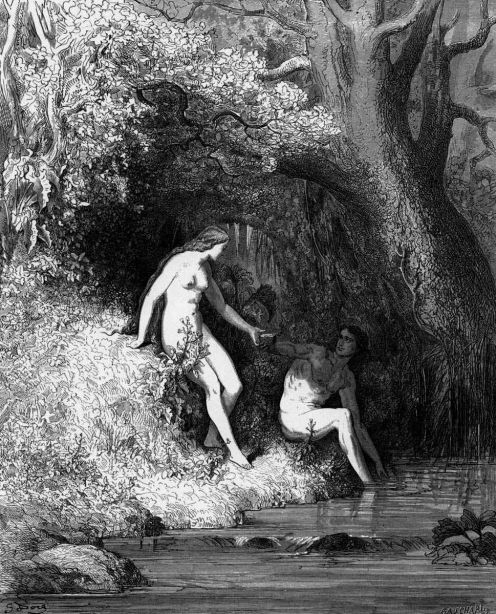
Adam and Eve Drink from the Stream. Gustave Doré (1832-1883)

A little later on, the description includes the following verses, in which the poet’s voice reiterates explicitly that neither nudity nor genitalia are inherently shameful:

“Nor those mysterious parts were then conceald,
Then was not guiltie shame, dishonest shame
Of natures works, honor dishonorable,
Sin-bred, how have ye troubl’d all mankind
With shews instead, meer shews of seeming pure,
And banisht from mans life his happiest life,
Simplicitie and spotless innocence.
So pass’d they naked on, nor shund the sight
Of God or Angel, for they thought no ill:
So hand in hand they pass’d, the loveliest pair
That ever since in loves imbraces met,
Adam the goodliest man of men since born
His Sons, the fairest of her Daughters Eve.”

Will Hollywood allow full frontal nudity for this “Simplicitie and spotless innocence” without an R rating, or NC-17, or an NR? Perhaps the violence of Satan’s strife will merit an R behind which the nudity issue will disappear; perhaps if there is sustained full frontal nudity of both sexes the most likely rating is the NC-17. But the irony of nudity even needing, in the ratings world, any kind of cautious attention at all, only shows how far indeed we have “fallen” from that lost paradise. Not even über-illustrator Gustave Doré could depict “those mysterious parts” in his work for Milton’s poem (above).

According to Variety, Hollywood Reporter, and SciFiMafia, the confirmed cast includes Bradley Cooper as Satan, Diego Boneta as Adam, and Camilla Belle as Eve, along with Djimon Hounsou (Abdiel), Rufus Sewell (Samael), Casey Affleck (Gabriel), Benjamin Walker (Michael), Sam Reid (Raphael), and Dominic Purcell (Jerahmeel / Moloch).

Special effects and nudity: hmmm…. what do you think, will the film’s Eve and Adam lack belly buttons??? I hope the producers realize they have the opportunity to weigh in on this most navel-gazing of thorny theological questions!

Giving a Stitch

It’s the season of Thanksgiving here in the US. With turkey or tofu dinners on their minds, many generous folks give food to food banks so that others less fortunate can enjoy a hearty meal on Thanksgiving, too.

It’s also the beginning of colder weather in most of the country, which is an excellent opportunity for nudists, whether acting alone or in organized groups, to donate not just food but also clothing. Thrift stores and the Salvation Army will accept any donations of usable, clean clothes, especially coats, hats, mittens, scarves, and blankets at this time of year. Their website has information about how to sponsor a clothing drive at your workplace, school, or, yes, even your friendly local naturist park.

I’m glad to make clothing donations for the good of giving, but not for that reason alone. I also happen to enjoy participating for the reason that many of the clothing items I wear myself either have been or will be recycled. When you buy a paper or plastic product made out of partially recycled material, do you question what use the material had before? If some shirt fits me and it’s what I need, I’ll wear it; I don’t care who owned or wore it before. It’s not that different from growing up with siblings and being used to hand-me-downs. Really this is just another way of recycling responsibly, and recognizing that we all share our resources just like we share the planet.

My family and I donate clothes often and, when we need clothes, we shop frequently at thrift stores. We’ve utilized consignment stores as well, where you can be paid a percentage of sales if the clothes you donate are bought (depending on how quickly they’re sold, etc.). Garage sales, of course, are good for buying and selling clothing economically, and there are New-Mom networks for swapping the very quickly outgrown clothing of infants and toddlers.

Hey, we’re all members of the greater body politic, right? Need clothes? Shop or swap through recycling, and help subvert textile dependency. Do you have a wrong-size or wrong-color t-shirt from one of the times you ran the Nude 5K? Give a stitch, and spread a positive message about nudism while you’re at it!

Paul Gauguin, Study of a Nude (Suzanne Sewing), 1880

Wild Child of the Forest

“How naked, and–how bold!”

These are Mother Wolf’s words to describe the man-cub discovered in the jungle, who has come to drink her milk with the other cubs. The wolves are astounded by the child’s lack of fur, so Mother Wolf names him for his smooth skin: Mowgli, meaning “frog” in Hindi. That man-cub is, of course, the protagonist of Kipling’s The Jungle Book stories, first published in 1894. Mowgli in India, like the later Tarzan in Africa (Burroughs’s novel Tarzan of the Apes first appeared in magazine form in 1912), grows up among the animals of the jungle a true naturist, a wild child without the slightest need for clothes.

Cover art by Stuart Tresilian (1891-1974)

Illustrators of the dozens of editions of these wildly popular stories have struggled with the matter of the characters’ nudity. The Mowgli-inspired site Wild at Heart offers a compendium of The Jungle Book cover illustrations, along with the complete texts of the stories, as well as links to many other illustrations and Mowgli-inspired fiction (some of the links, with clear warning, lead to adult content). The best naturists among these illustrators portray Mowgli’s nudity unabashedly. Others place a bough or turn a thigh to avoid depiction of genitalia. And still others, most notably the Disney team, rather insidiously introduce loincloths for both Mowgli and Tarzan, just as they would cover the Little Mermaid’s chest with a shell-bra contraption.

Beyond mermaids, another girl from the wild child tradition is Pyrénée, who grows up in the mountainous wilds along the border between Spain and France. Her adventures fill the 1998 French graphic novel Pyrénée by Regis Loisel and Philippe Sternis. Like Mowgli and Tarzan, Pyrénée learns from animals (a bear and an eagle), discovers a certain, limited utility for clothes (warmth in the winter), and eventually struggles to find a way to re-enter human textile society.

All of these literary and graphic creations are loosely based on tales of feral children, such as the Roman legend of city founder Romulus and his twin Remus, abandoned to die in the wild only to be suckled by a she-wolf and rescued by shepherds. But in her marvelous 2006 novel The Jungle Law, Victoria Vinton explores another possible influence on Kipling during the time he was composing the Mowgli stories: a unique friendship in the wintry countryside of Vermont, where the writer spent a few years and where his daughter was born. In Vinton’s “just-so” novel, Kipling befriends the neighbor child, Joe Connolly, who drinks in Kipling’s stories even as the boy’s own attempt to live those stories informs Kipling’s writing.

The boy is motivated, as so many of us are, by the fantasy of striking out from civilization and living in a natural state. Mowgli’s kindred spirit Huckleberry Finn, an American version of the wild child, described life on the river raft with Jim in a way that sums up the attraction as well as the utility of this natural state: “we was always naked, day and night, whenever the mosquitoes would let us–the new clothes Buck’s folks made for me was too good to be comfortable, and besides I didn’t go much on clothes, nohow.”

At the ends of their wild child stories, Huck, Mowgli, Pyrénée, and Tarzan inevitably have to reconcile with “civilization.” That’s precisely why they can still teach us all a hard-fought lesson about the essential vitality of life without clothes.

Peace, Love & Nuderstanding

It ain’t no typo, ya’ nuderstand? If you nuderstand me, you stand by me in nude solidarity! It’s a nuder understanding, an understanding without the underwear!

Words are tools of thought. Sometimes, to express new thoughts, or even to refresh old ones, we need new tools. The language that we use to speak and write about naturism and nudism is key in helping textiles move toward an understanding of why living nude is not only fun but vital. That understanding is what I’d like to think of as nuderstanding!

There are some great terms in the nudist/naturist world that were coined precisely to accommodate new nuderstandings. I’m thinking of The Naturist Society founder Lee Baxandall’s insistence on the term topfree (about the right to bare one’s chest) over topless (often though not always about sex). With a similar emphasis on freedom, the folks who produce Nudes in the News have been popularizing the term clothesfree for about a decade now. TNS activist and writer Mark Storey has popularized canuding and other forms of nudification. AANR has cleverly maketed the idea of a nakation to attract more vacationers to that option. Through this blog and twitter feed I’ve come up with a few more terms, though perhaps others have already coined them: nudelore and clothes-trophobic.

Neologisms shouldn’t overwhelm the discourse. If you create too much of a jargon, then you’ve set up a wall for keeping out the unitiated, when what you want to do is the opposite: attract folks to something that may well be an unknown practice, an unexperienced way of being in the world. But creating a new but nuderstandable term, like clothesfree or nakation, can help put a positive spin on the unknown experience, a try-something-new shine, while reconciling the old (for example, canoeing) with the new (doing it nude = canuding).

And just as much to the point, naturists and nudists should shy away from the many euphemisms for our body parts that I won’t even attempt to list or engage here. Body acceptance means accepting our bodies completely, including labias and penises, vulvas and scrotums, buttocks, nipples and breasts.

In Co-ed Naked Philosophy the students who take Dr. Ross’s clothesfree Aesthetics of the Body course decide to form an activist group they call the CRM, Corporal Rights Movement. One of their goals is to “Reclaim the Image” of the nude human body from the porn industry. Their professors coin the term innudators to refer to the group’s innovative members, and also the term uncovery to describe the moment of epiphany when a textile first experiences the liberation of social nudism!

As always, “the medium is the message.” The CRM students learn that leaving your clothes behind whenever possible, while engaging in normal, ethical, everyday activities, is the best message. But words help get the message across, before, during, and after. Please feel free to respond in the comments with more examples of nude-ologisms (oops, another one)!

Nude on Halloween

Many nudists and naturists love to dress up for Halloween. This may seem contradictory at first blush, but it actually makes a lot of sense. More than most people, nudists and naturists realize how much of a costume our everyday clothing is, and how arbitrary the way that we dress ourselves is. (Really, why do we use tops and bottoms, insisting on dividing our bodies that way? It can’t be easier than just a robe or wrap! Neckties, business suits, bras, most shoes and many other items of dress are simply costumes.)
So Halloween is a great chance to go crazy with the idea of costumes: to emphasize how difficult it would be for werewolves to keep their clothes on after turning into animals, to explore how witches might have hosted some of the best forest-clearing nudist gatherings of all time, or to unwrap the truth about what a mummy might not be wearing under his or her bindings. One of my favorite stories from Noodtoonist’s The Bare Pit series is his wonderful Halloween-themed “Tales to Scare Your Pants Off”, which explores these topics with amusing insight. The spooky tales feature nudist vampires, ghosts, and a singularly fantastic were-nudist, complete with shredded clothes, a mob with torches (public reaction to nudists??), and his nemesis: the silver lamé hot pants…

Bodypainting, a nudist favorite, is also terrific for Halloween transformations into superheroes, robots, aliens, fairies, vampires, monsters, etc. Painting a nude body canvas can give the look of being dressed while still allowing for the skin’s constant contact with the autumn chill and the pale moonlight of All Hallow’s Eve, just like in the Halloween streak from my novel Co-ed Naked Philosophy. And then of course, there are those perennially popular jack-o’-lantern streakers!
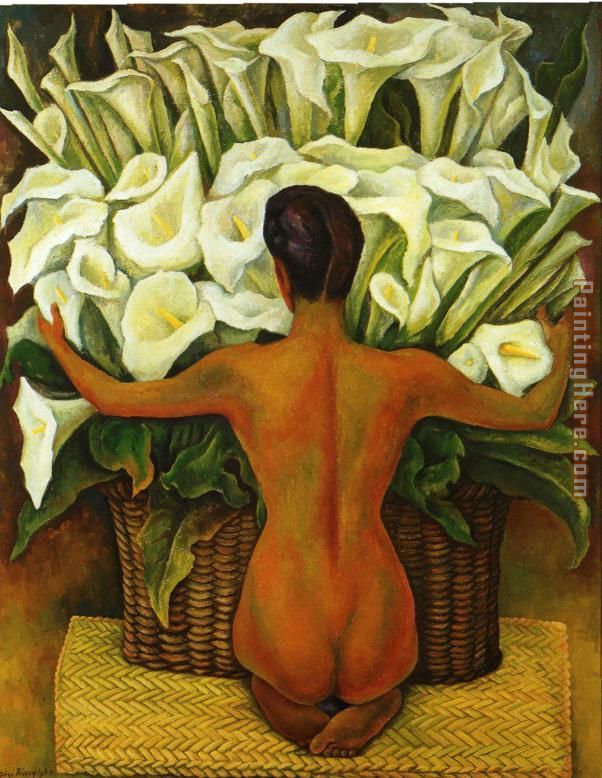
But maybe for those of us who prefer to be nude when we can, there is a more profound–less superficial so to speak–reason for loving Halloween. When you can’t wait to get out of your clothes and into the sun, you have, perhaps, a heightened sensitivity to life’s fleeting nature. A naturist feels that old theme carpe diem very deeply. Halloween and the Mexican Día de los Muertos resonate because their ancient origins hearken back to the need for a harvest, the absence of the sun (winter), and the cycle of life and death. Nudity, in this light, is a fully embodied celebration of life that serves to more sharply contrast against the bony profile of the skeleton in death. In my novel Co-ed Naked Philosophy, Angela Saucedo, one of the pioneers of a nudist group on campus, imagines nude life as “those Mexican papier-mâché miniatures… the calaveras that depict everyday scenes with skeleton citizens… el médico”… “el salón de baile”… “la escuela”… “los mariachis”… el café”… “los marineros”… except instead of Posada’s skeletons… bereft of fleshly exuberance… we’re Rivera’s shapely nudes.”
It’s the fundamental and inevitable embrace of life and death: the skeleton and the flesh that work in tandem to animate or give life. Steve Jobs said it best: 
“…almost everything–all external expectations, all pride, all fear of embarrassment or failure–these things just fall away in the face of death, leaving only what is truly important. Remembering that you are going to die is the best way I know to avoid the trap of thinking you have something to lose. You are already naked. There is no reason not to follow your heart.”
Words to remember for a hale and happy, and cleverly-costumed-while-as nude-as-possible, Halloween!

Introducing the Family

What do you do when you’ve found that your love for being nude is not shared by your family? First, clarify your assumptions. Maybe you aren’t giving your family members enough opportunities, or enough information, to decide for themselves. Don’t write them off just yet!

That was my experience. What follows is the story of how I introduced my family to naturism. The story has its moments of tension, but it also has a happy ending.

Some fifteen years ago when my spouse and I lived near the Gulf Coast, we would go to Florida panhandle beaches from time to time. Because of my interest in naturism I had already learned of an unofficial nude “end” of one of the beaches in the area. On one of our trips I arranged for us to visit the textile “end” of the beach, and once we were there I mentioned to my wife what I had heard about a nudist area. She gamely went with me to investigate “if it was for real,” with our three-year-old in tow. Well, it was indeed for real, and it was full of all kinds of people that day wearing birthday-suit attire. Our daughter shed her swimsuit quickly and so did I. My wife kept her bikini bottom on but removed her top. We spent a couple hours there and had a great time. Putting our suits back on felt awful.

I was hooked. I started researching more about nudism and about naturism as a movement. But shortly afterward we moved to the central US, and shortly after that our second daughter was born. It was a new beginning.

I learned of a naturist group in our new city, but when I contacted the leader through email I was told that group members had to be at least 40. My wife and I were in our early thirties! Then I found out about a nearby naturist park. Membership was costly enough to be out of the question, but there were annual 5Ks to run on the grounds! I ran my first nude race that first year after our move.

My wife didn’t understand this. A clothes-free area of a beach had seemed natural to her, but not a park where people went, or even lived, for the purpose of being naked around others. She didn’t get the “social” part of social nudism, and assured me that I was being naive about other people’s intentions. We had a heated, involved conversation about how people with impure motives can sully any kind of social endeavor, and that society by nature isn’t perfect.

Nonetheless I persisted in discussing the issue from time to time, and in running the race when I could–a few more times over the next years. My family always knew about it, and they were by that point used to me being naked around the house when possible. One year, through contacts I had made, I was set to participate as a speaker in a weekend seminar on naturism at the park, but my spouse put her foot down. She said that since it was something that she would be embarrassed to tell our family and friends about, then she was uncomfortable with me doing it. I pointed out that I would not be embarrassed to talk about it with our family and friends, but that made little difference. I decided to respect her feelings and try to adopt a “lose the battle, win the war” approach. I did not attend the seminar.

The following year the park was featured in a favorable front-page article in the local weekly, just a matter of days before the park hosted the national AANR convention. I told my spouse that I wanted to attend the convention, (the one day that I could, given my work schedule), to learn more about what a social movement around nudism could be. I told her what I understood about AANR from their website, and we agreed that it was legitimate and professional.

That day at the convention I met plenty of interesting and friendly folks, among them a couple who live at the park, and whom I later invited to give a presentation for a course I was teaching. When they came to the class, they gave an excellent talk about social nudism in history and in contemporary practice. The students were very polite – some skeptical, but all quite interested by the end of the presentation. I became good friends with this couple, and when they invited my wife and I to their home at the naturist park, my excellent wife accepted the invitation. They welcomed us enthusiastically and took us on a golf-cart grounds tour before we sat down to a wonderful meal. My wife did not undress that evening, but it didn’t matter – what mattered was that she felt comfortable being around them, and that she realized that she felt comfortable at the park.

My friends deserve all the credit here, because that evening a very important threshold was crossed. A few weekends later, my partner and I were back at the park, with both daughters along, for a house-sitting visit while our friends were traveling. My whole family and I hiked nude that day, and generally enjoyed the sun and the breeze as a kind of natural balm. (The only unfortunate circumstance was that the pool was unusable for us as parents with a toddler learning to swim, because the pool was constantly full of folks playing water volleyball!)

Returning to the idea of being nude outdoors as a kind of natural balm: in fact the sun really was a kind of therapy–heliotherapy–for my older daughter especially that day, who had recently had surgery for pilonidal cysts along the cleft of her buttocks (apparently this is a relatively common affliction for teenagers). Being able to expose that area of herself to the sun and air probably played a big role in her remarkably quick postoperative recovery – a week later, her pediatric surgeon was amazed at how quickly and how thoroughly she had healed. No kidding!

The following summer–this past summer–we returned as a family for the 5K race. I thought my wife was just going to accompany me so I could register, but she ended up running the race herself as well! It was a terrific and most welcome surprise. We both won medals, and later we had the winning bid on a basket in the silent auction. And the following month we returned once more as a family to spend an evening with our friends.

Even though the cost of family membership at the park continues to elude us, for two years now we have been enjoying family visits a few times throughout the year. And even though my wife and daughters may not be as dedicated to a naturist lifestyle as I am, they have benefited from learning about naturism and from experiencing it with family and friends. They are now certainly more comfortable with the practice of nudity, and more desirous of opportunities to be nude, whether at home or outdoors. And although my wife still struggles sometimes with understanding how “social” can fit with being nude, she is much more accepting of the possibilities now than she was before.

So what I learned is that sharing information in frank discussion is key, and, more fundamentally, upholding the pact of mutual respect and patience that any long-term loving relationship entails. Of course, this advice applies to just about anything, not just social nudism! Be persistent and be honest about what you see to be the benefits of naturism, and you may yet convince the people you love.

The Naked Knight

A Nugget of Nudist Nonsense

There once was a knight who, to small stature born,
went out in the world wearing all could be worn.
He dressed endless layers of cotton and wool
to fit ‘neath the armor he always wore full.

How a man schall be armyd at his ese

He sweat, and he stank, from such bindings, ’tis known.
He seemed to stink more than one man could, alone!
His helmet, so heavy, with visor and plumes,
did little to mask his most rancid of fumes.
Ignoring the knight as he rode ‘gainst his foes
was possible only for those with no nose!

One noon as he neared the quaint hamlet of Knude–
his head, chest and feet were quite steamed, seared, and stewed–
the Knuders, their noses assaulted and stunned,
ran into the street to the knight baked o’erdone.

“Come not to our town,” cried the Knuders united,
“you’re not welcome here without being invited!
You’re not only armed but you’re armored as well,
alerting us leagues away just by your smell.
You see, we don’t bear arms, we bare them. What’s more,
we need no clothes: nothing that’s wore or that’s tore.”

The knight, through his helmet, could barely perceive
that the Knuders wore no pant, no skirt, and no sleeve.
He lifted his visor the tiniest notch,
and spied, of that thicket, each trunk, limb, and crotch.

“No, no, no,” quoth the knight. “This should never be viewed!
How can it be true there are no clothes in Knude?
Nobody is clad? No one’s hooded or shod?
I warn you, rude Knuders, it’s notably odd.
From now on–now hear me–each person in Knude,
must henceforth be always clothed, hooded and shoed:
No nates and no navels, nor nary a nipple,
no napes and no kneecaps, not even a knuckle.
If it’s not a nose, keep it nether and tethered.
I mean it!” the noxious, nefarious knight said.

The Knuders knew not the knight’s needs, nor could guess.
They only knew Knuders know not how to dress.
But since the knight brandished his lance and his spear,
and weapons or shields were not anywhere near,
they grumbled and fumbled for old knits and knickers
while meeting the knight’s wrath with chuckles and snickers.
Patched neckerchiefs, neckties, and knotted-up nappies
were thrown in a heap ’til the knight seemed most happy.

“Now put them on, knaves!” yelled the knight with a sneer,
who, wishing to see not, turned peepers to rear.
The Knuders wrapped nappies ’round ankles and knees,
and neckties ’round nipples like ribbons ’round trees.
The knickers they slung o’er their napes and their necks,
and stretched out the neckerchiefs, nates ’round to sex.
They covered the rest with odd knits and old nettings,
and when they had done, none believed such a setting.

Intensely nostalgic, one not-naked Knuder
invented a name for the noisome intruder.
She christened him “Sir Not-a-Nose,” and it took.
“See here, Not-a-Nose,” they called, “turn ’round and look!”

Incensed, the knight spun on his heels and reviewed
the cleverly wrapped, trussed, and bound folk of Knude.
No noise did he make. All was quiet in town,
’till the knight laughed so hard he fell down to the ground.
He rolled in the street, banging hard with his fists.
He writhed on the ground in strange slithers and twists.
He gasped for air. None came. Some Knuders, quick-thinking,
pulled off the knight’s helmet and loosed his head, stinking.
“Pe-ew!” cried the bystanders, squeezing their noses.
“Quick, go fetch some water ‘ere all he exposes!”

And soon, in the sun, lay the knight newly naked,
his armor heaved off, endless layers forsakèd,
and wet as a fish, he kept gulping for air,
while meeting the Knuders’ collective cold stare.
“You see now?” they asked him. “How silly are clothes?”
“How random, restrictive, and strange, Not-a-Nose?”

The knight felt renewed–nay, reborn and refreshed!
He silenced his sputter and drew a deep breath.
“I see, indeed, Knuders, how strange and how silly,
for all of you, still, are costumed willy-nilly!
Let no one deny that I’m ‘Sir Not-a-Nose,’
the sole soul in Knude now not donning his clothes.”

The Knuders regarded each others’ stitched mixtures
and gave glad guffaws as they ripped off their strictures.
The townsfolk reveled in their common Renàissance,
with Knude games, Knude feasts, and more Knude celebrations.
Sir Not-a-Nose stayed on in Knude, as a sentry,
maintaining the Knude territory garmènt-free!

The lessons, dear list’ners, to all who are wise:
Go naked! Clothes stink. Your skin’s just the right size!

This is my original text. Feel free to share, just give credit where credit is due, please!
Image credit in caption.