A Big Step for Organized Naturism in Latin America

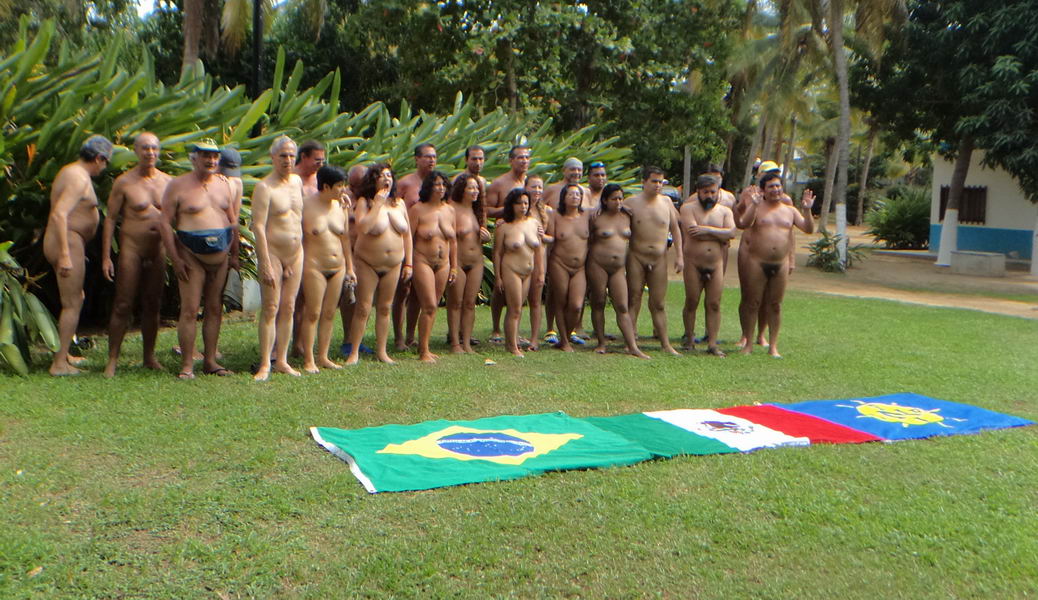
Last weekend, January 28-30, the sixth ELAN took place at Zipolite Beach in Oaxaca, Mexico. ELAN is an acronym in both Spanish and Portuguese for Gathering of Latin American Naturists. This is important because naturism always needs organizational support in the face of ignorance and repression, anywhere in the world, but especially in areas where organized naturism is relatively new, and Latin America is one such area. Certainly naturism as a social practice is not new anywhere there are humans, to some extent, but Latin American organized naturism is younger than in other areas of the world. The oldest national organization in the region, the Federação Brasileira de Naturismo (FBrN), has just turned 28. The ELAN meetings started in 2007 through an initiative between Brazil and Argentina and had been exclusively South American until this year’s event in North America (Mexico).

For the sixth regional Gathering, or Encounter (Encuentro / Encontro), the selection of Mexico as host also holds special significance. The Federación Nudista de México (FNM)* is not quite five years old, yet Mexico is – by far – the most populous Latin American nation after Brazil. At the previous ELAN, the Brazilians, who are the most organized, pushed to support Mexico as host to help build strength in the region. And whereas Brazil has a dozen or so official naturist beaches with legal status, in Mexico there were not, until this very event, any such official naturist beaches, only arrangements with hotels (for example, along the Riviera Maya) or else the impetus of tradition, such as at Zipolite where social nudity has long been tolerated.

Participants at the 6th ELAN (Latin American Naturist Gathering), Zipolite, Mexico, January 2016
Photo source: jornalolhonu.com

At the event, which was the first such international naturist event in Mexico, only Mexico and Brazil participated as official delegations, although there were also participants from Argentina, Chile, Costa Rica, Ecuador, France, Peru, the United States, and Uruguay who made the journey. I’ve been reading coverage of the event this week in both Mexican and Brazilian sources (URLs below) to compile this write-up and provide a sense of different perspectives on the event.

Juan Castañeda, president of the Mexican organization, recognizes many precursors for organized naturism in Mexico, including social media sites or listservs such as Nudmex, but is proud to note that the FNM is the first official group that is linking naturists all over the country. He sees acceptance of social nudity as the long game – a matter of patience and education. But in the short-term, to pull off this event, he worked closely with the municipal and state governments, the tourism office, and the local hotel association, since, according to one report, there were more than 3000 people participating in some way yet there are only a little more than a 1000 hotel rooms in the immediate beach area. (The official ELAN meetings had about fifty people.)

Probably the most important immediate concrete result of the event was that, for the opening ceremony, the city council declared Zipolite beach to be officially nudist, giving it legal status and making it the first such legal nude beach in Mexico. In part this was merely money talking, since the naturists who came for the weekend and who come year-round are a big boon for the local economy. Local merchants and business owners are on record as stating that the event was a huge success financially. Area authorities also helped construct a stage on the beach for some of the events that were open to the public, which helped draw more general interest to naturism. Also, a smaller, local Mexican naturist organization, not affiliated with FNM, held their yearly meeting simultaneously at the naturist-friendly hotel Nude. The meeting helped boost the numbers of nudists in the area overall, although that organization chose not to coordinate with the ELAN organizers. Another clothing-optional possibility for accommodations was Posada La Buena Vida (now BudaMar).

Bodypainted participants with the ELAN VI logo

Mexican hospitality is always outstanding, and the visitors were impressed by the traditional presentation of folkloric dances (with appropriate outfits – not nude dancers), the fantastic Mexican cuisine, the tropical landscape, and the fact that social nudity seemed to already be quite accepted at Zipolite, with a notable absence of voyeurs. The theatrical production Empelotados (Buck Naked), by Antonio Díaz Altamirano, was presented twice – once on the beachfront stage for a general public, and once inside the Rancho Los Mangos property where many of the official events were held and where many of the participants were housed. Empelotados is a pair of short plays, one about a husband’s difficulty in getting his wife to accept naturism, and the other about people’s reactions to finding out that their friends or co-workers are naturists. Other nude events included yoga classes, a beach hike, bodypainting, meditation, wine and mezcal tasting, and workshops on a variety of topics.

In general the news reports in both Mexico and Brazil were positive, and tended to include at least one quote from an organizer or participant clarifying the healthy, non-sexual character of naturism. Conclusion: this has been a huge success for organized naturism in Mexico, with spillover success for Latin America and for naturism in general. The Zipolite authorities are already scrambling to organize more such naturist events, and the Latin American naturists have taken a strong step toward a proposed goal of an official Latin American naturist confederation to promote and defend naturism.

*Note – In Mexico and many Spanish-speaking countries, “naturista” means health food and related products. It’s common to see a “Tienda Naturista” (Naturist Store) that has nothing to do with social nudity. This is why naturist organizations tend to use the term “nudista” in Spanish.

¡Quieren ver a más mexicanos “en pelotas”!


http://diario.mx/Opinion/2016-01-31_3ea0b7d9/playa-desnuda/
http://imparcialoaxaca.mx/la-capital/8qe/declara-cabildo-municipal-playa-nudista-a-zipolite

Decenas celebran en el sexto encuentro de nudismo en Zipolite


http://www.jornada.unam.mx/2016/01/31/estados/024n1est
http://www.noticiasnet.mx/portal/oaxaca/general/turismo/326031-se-reunen-nudistas-del-mundo-zipolite
http://www.jornalolhonu.com/jornais/olhonu_n_183/evento.html
http://www.jornalolhonu.com/jornais/olhonu_n_183/especial.html

The Natural State

If you’re one to bare
your skin to the air
just about anywhere,
then you better beware
in The Natural State!
The “shirt off your back”
is what you’ll lose fast
if you dare to unclasp
your bra or your pants
in The Natural State:
a sentence, a fee –
a price way too steep
for going clothesfree,
living naturally,
in The Natural State.
“Unlawful for any” – 
one person or many – 
to “promote nudism.”
Why such tyranny
in The Natural State?
No strip clubs by schools?
That’s fine and that’s cool.
But nudity in pools
isn’t such a bad rule
for “The Natural State.”  
Where there’s nude censorship
it’s a crime to skinny-dip,
a risk if a nipple slips,
since the laws are too strict
in The Natural State.
You can’t even try
 running naked outside –
to feel the wind in your stride,
and get some sun on your hide –
in The Natural State.
Look, it’s highly ironic
and frankly moronic
to cover up bodies
from the sun, wind or water
in “The Natural State.”
So there’s no way around it,
and Arkansans don’t doubt it.
The rest of us should shout it:
Your clothes? Go without ’em
in THE NATURAL STATE.
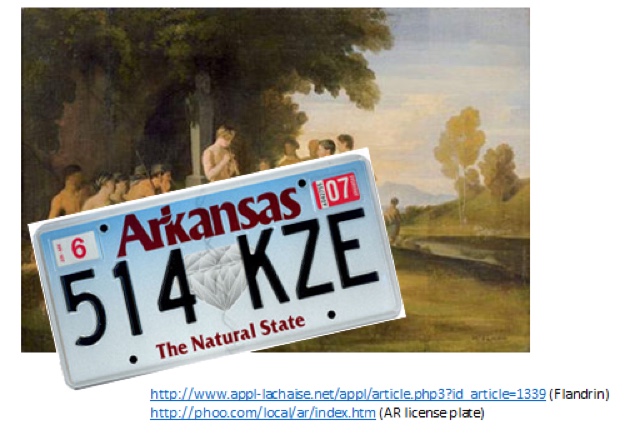
Nude-positive commentary against Arkansas’s restrictive laws:

Naturist Memes and Photo Captions

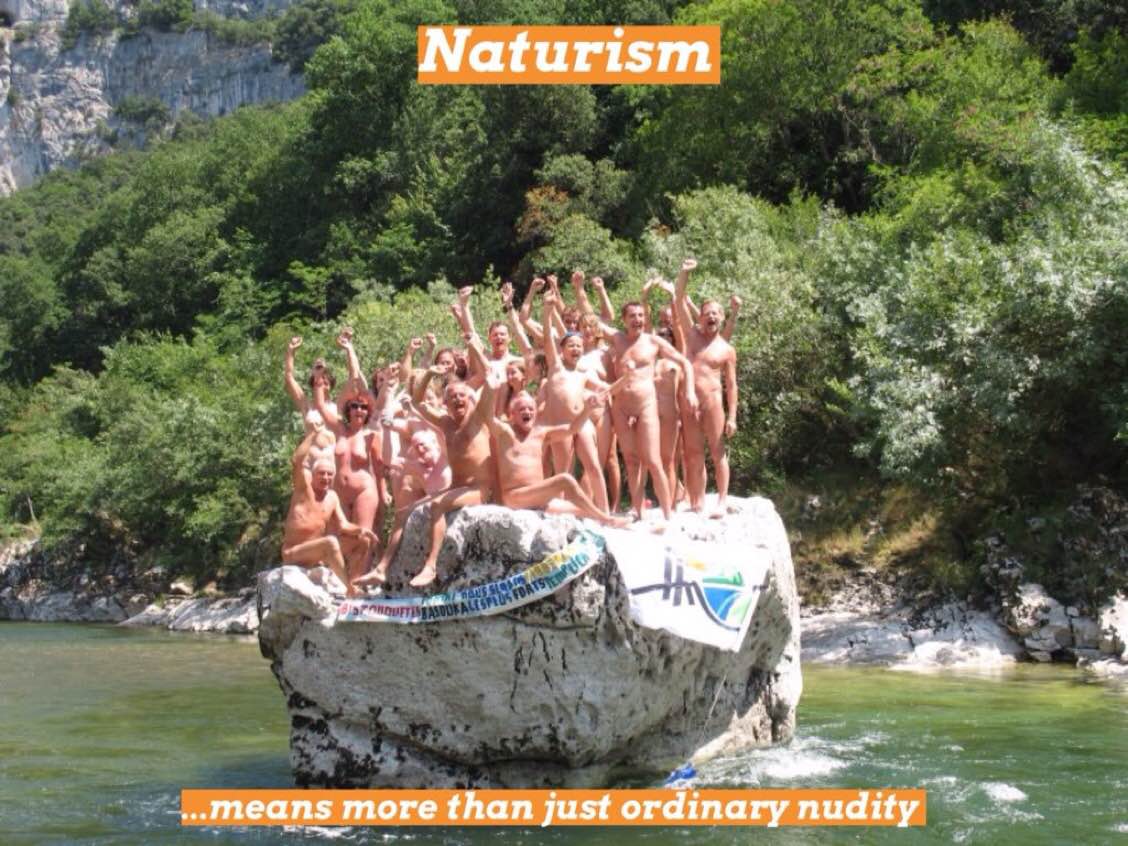
Savvy naturists on social media have been making naturist memes and captioned photos for some time now. There’s much that’s already been said about the way contemporary social media affect our attention span, bringing fully to life the old saying that a picture is worth a thousand words. I agree with the sentiment of Bare Platypus’ recent post – the appreciation for articles, blog posts, and longer written pieces, while also embracing the efficiency of memes and photo captions in helping spread positive messages about naturism.

In fact these newer meme-type images can be located on a spectrum of graphic production and consumption that extends back to the popularity of naturist or nude beach postcards in the early to mid-twentieth century, a topic that Naturist Society scholar Mark Story has been exploring in a series of illustrated articles in recent issues of N magazine. Like the earlier postcards, these new memes and captioned photos illustrate a quick message about social nudity and/or nudity in nature. Also like the postcards, sometimes the messages and images are meant more to titillate or scandalize, but many – perhaps the majority – promote naturism with body-positive messages.

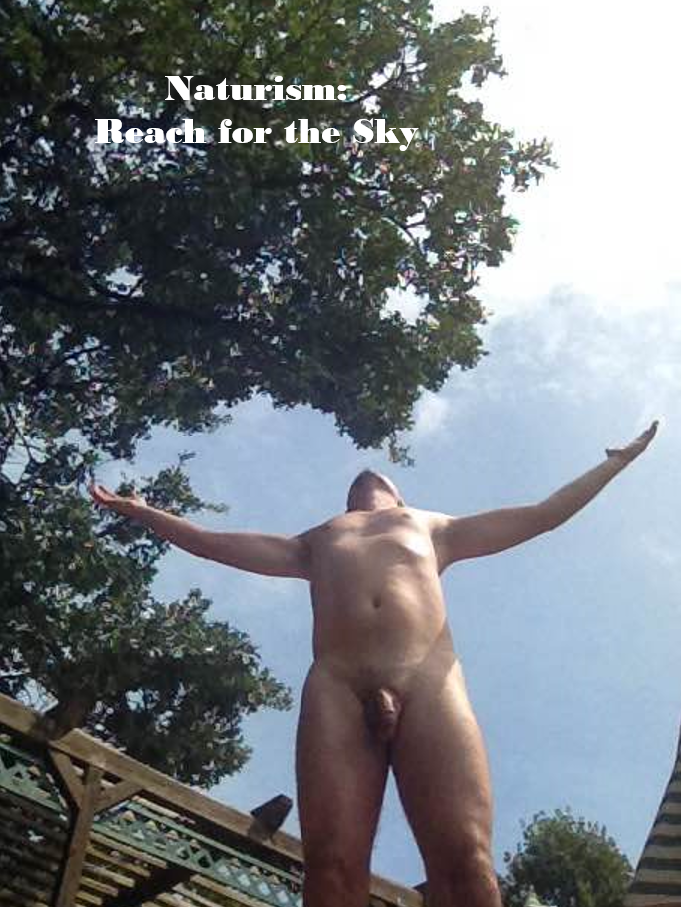
The best memes communicate something more than the tried-and-true message “KEEP CALM AND STAY NAKED.” There are many examples of words-only memes that work very effectively and have the advantage of being acceptable on Facebook or Instagram. An example of a successful meme that does include images is a series from @Wpg_Nudist – sets of four photos of people doing ordinary activities while naked, always captioned with the same slogan, Do It Naked!I’m going to focus here on the efforts of selected Twitter users who have honed their skills to produce new, good-quality captioned photos almost daily. But first, an attempt submitted by a supporter of this blog. The patch of blue sky has something of a heart shape – I think it’s a nice touch!

 
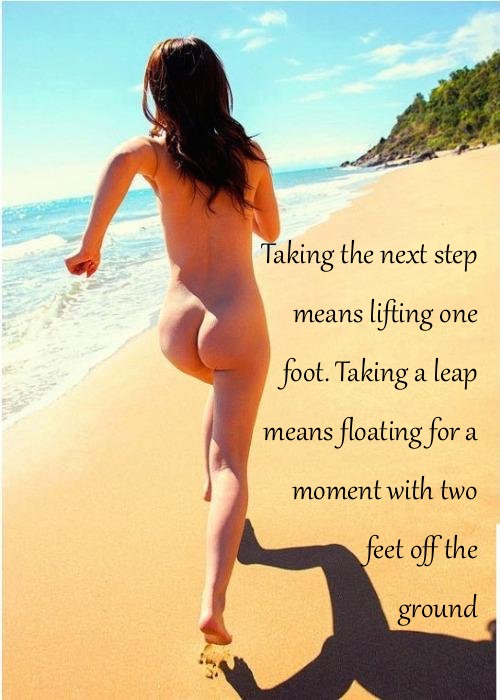
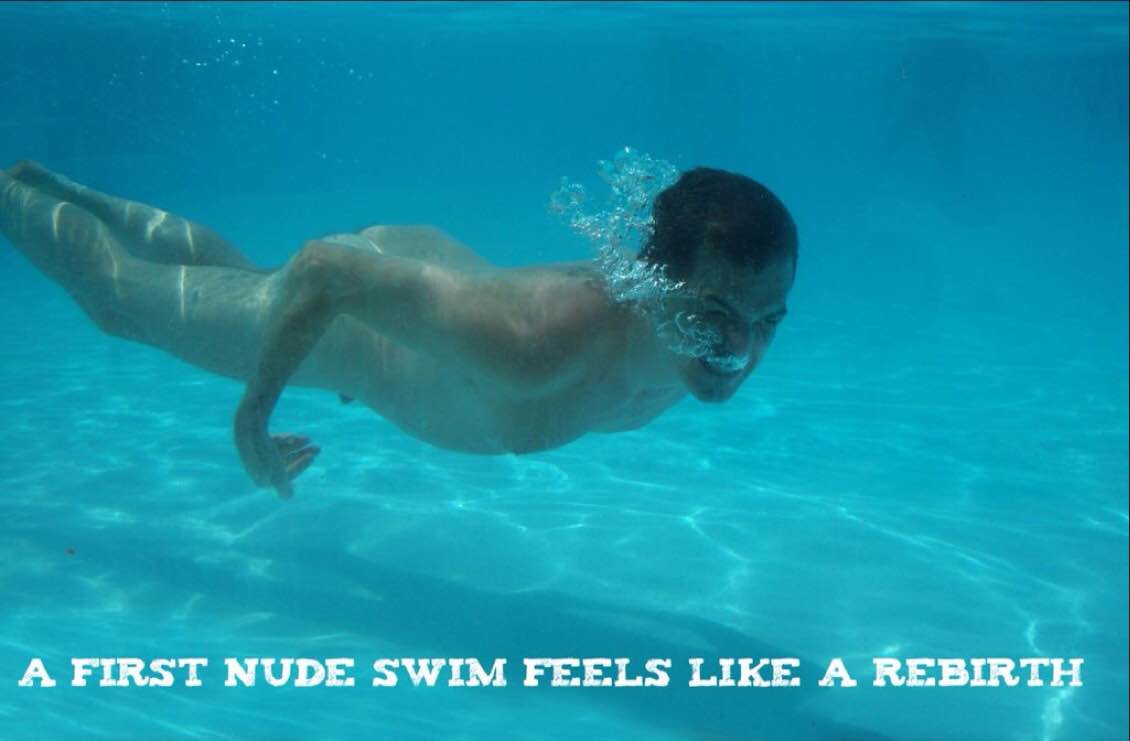
A very skilled and sensitive photo captioner is TweettoTouch. Here is a sampling of his recent captions – I appreciate these three images in particular for their focus on movement, on the nude body in motion, and on the sensations of absolutely primal and essential liberation we feel when running or swimming free through the natural environment.
Bjor is also a tweeter of excellent captioned photos, associated with clothesfreelife. For framing the images he captions, he has developed a trademark color that is a mix he made from the skin tones of photos of eight of his friends of varying ethnicities. He also includes in his images his signature list of the words for nudism / naturism in several languages. Usually the captioned photos are produced in both English and German, and sometimes other languages as well. Bjor is assembling a 2016 naturist calendar. He also posts weekly captioned photos reminding men to check for testicular cancer. For his naturist captions, Bjor will often incorporate famous quotations. Here is a sampling of his efforts:
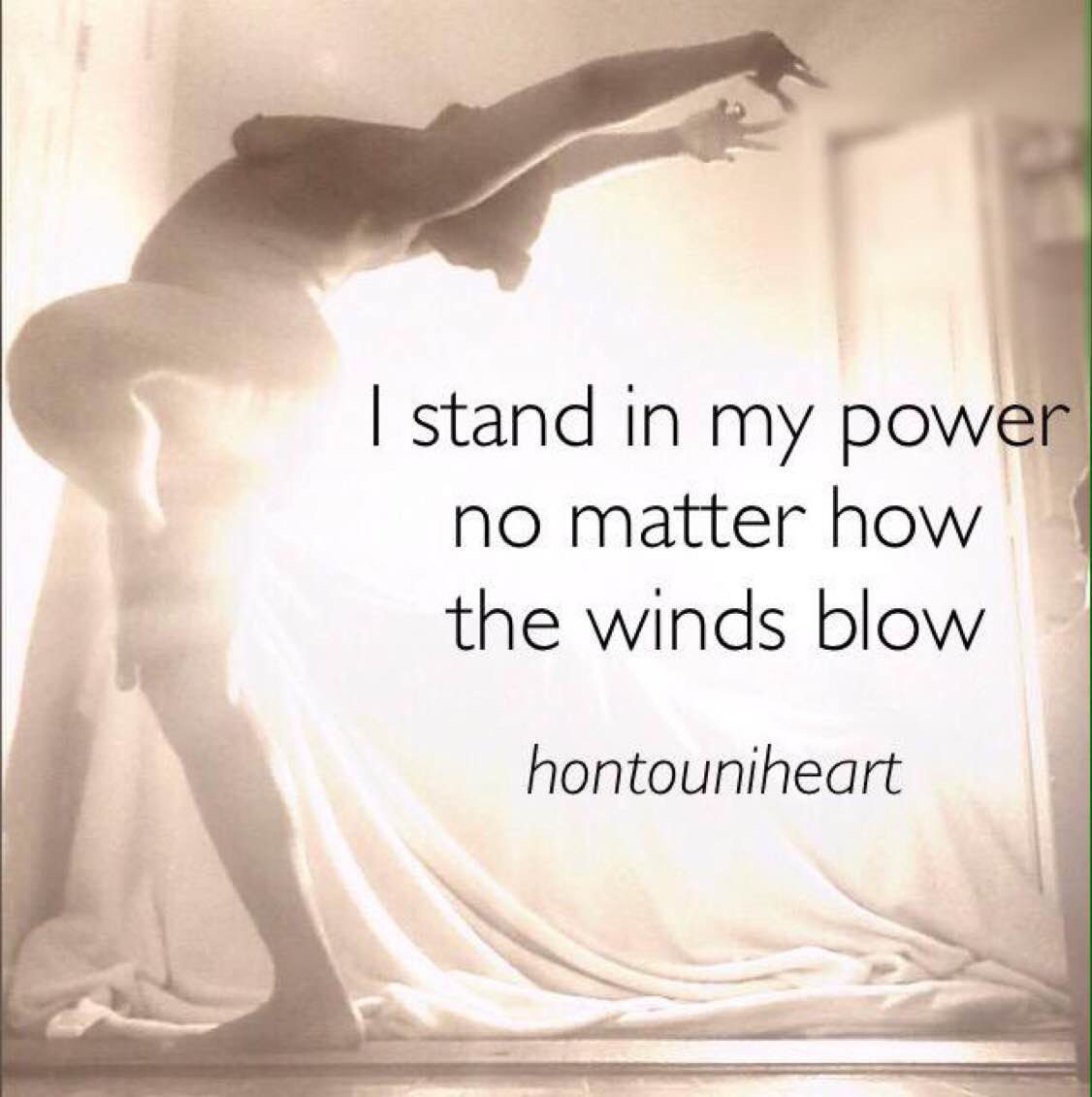
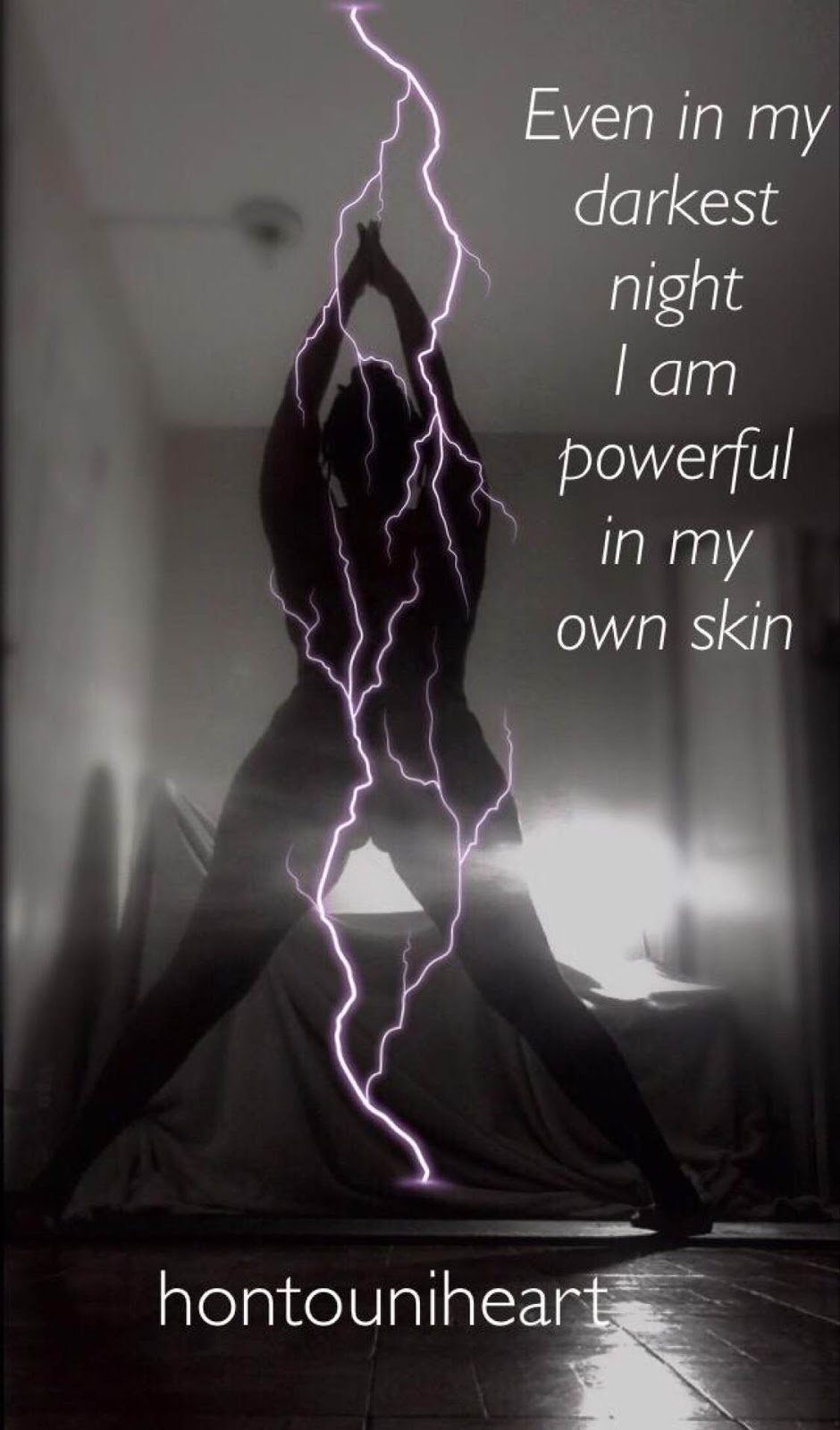
A prominent naturist voice who has been captioning exclusively her own photos is hountouni heart, also affiliated with clothesfreelife. She has bravely chosen to document her journey into body acceptance through naturism and nude yoga, not only in her photos but also in her sincere and very well-written texts and blog posts. Here are some of her beautiful captioned photos:
Another creative captioner -or captioner team- is making contributions through the nwNATURISM Twitter feed:
These four captioners listed above work from The Netherlands, Germany, United States and United Kingdom, respectively, showing just how international of a phenomenon these naturist images are. A few more to check out include Nude SoulSacred Nudity, and many others, I’m sure – leave your URL in the comments if you’d like to link for more memes or captioned photos.
I don’t follow Tumblr as much, but I would like to give a final mention to Made In The Nude, whose Tumblr blog I discovered when they linked to mine. The blogger(s) usually lead off a post with a captioned photo, and then follow with a straightforward, helpful text on naturism. Solid work!

Haunts

As someone who loves to be nude just about anywhere, it’s important that my home be something like Nude Central.  On days when I can’t be nude anywhere else, home is at least my nude haven. But since July I’ve been in the process of moving from one residence to another in my same city (long story), which reminds me of the origin of “haunt” in old words for “home” and “a place frequented.” I’ve had to say goodbye to some of my favorite “haunts” where I enjoyed being at home in my body, aka nude. 


At my former house there’s a deck overlooking the back yard and the forest beyond. The deck was a terrific spot for nude sunbathing, stargazing, and s’more making because, even though there was no fence, the shrubbery around the edges of the yard blocked most views of the area. I will miss greeting the day with naked coffee on the deck, and taking leave of the day naked while watching the moon and listening to the wildlife – owls, frogs, even foxes.  

There’s been an intermediate haunt this summer and fall – a furnished townhouse that has served as a convenient pied-à-terre. It has a tiny balcony overlooking the river. This balcony, barely fitting two chairs and a small table, has been a great place to kick up my feet and sit nude with a beer in the evenings, with a towel discreetly covering the side of the chair that can be seen from the street. And if I went skinny dipping in the apartment complex pool at 1:00 AM on a hot night in early August, well, all the better. It was a haunting immersion. 
Haunting
And now my family and I have moved into a new residence in a more densely populated area of the city. Yet this new back yard has a privacy fence on all sides and, as of this writing, there are no neighbors living in the homes on either side. Three houses in a row, and mine, in the middle, is the only “haunted” house, haunted by yours truly and family – the rest of the houses aren’t haunted at all, just empty! I’m looking forward to hosting nude yard parties once the weather turns warm again. In the meantime it’s exhilarating to step out the back door on chilly autumn mornings for a few sips of fresh hot coffee in the nude. 
I’ve been joking with a faraway friend that since we see each other so seldom, it’s as if we are just ghosts haunting each other through emails or texts. But truly haunting, I think, is being fully present, unforgettably and intimately present to the fullest extent possible. In other words, a ghost might wear a sheet, but to really haunt you’ve got be naked!

Escape the Drape

A reflection on naturist massage

Some people leave their underwear on, or their bra. Socks. Wristwatch, even. That’s just sad. If you’re receiving a massage, especially a full-body massage, it’s only your hang-ups about modesty and shame that keep you from uncovering your full body. Better to get those wrist-pinching, calf-scoring, back-branding objects away from your body and just relax.
If you are one of an unfortunately vast number of people who have been conditioned to think that nudity is shameful or immodest, you can at least find relief in the knowledge that the massage therapist is going to DRAPE you (and yet there are still those who will stay bra-and-pantied or briefed.) Oh so carefully, the massage therapist must be hanging the DRAPERY. The DRAPED massage is all about carefully swaddling certain parts of your anatomy, lest they be exposed to… anything whatsoever, apparently. This means that a lot of the therapist’s time and attention must go to the DRAPING of buttocks or breasts or what-have-you. Seriously, what do you have that so badly needs DRAPING? Sayeth the DRAPERS, “Let us all be protected from ourselves. Let us all be protected from each other.”

Wouldn’t want to be letting any “moon”light into view. Buttocks: windows of the soul. Who knew?

So you’re lying face down and you tell the therapist that sometimes you’ve suffered from sciatica. Oh, I know just want to do, says the therapist. And so she presses along your back, just to the right of your spine, traveling down until DRAPE DRAPE DRAPE DRAPE then you feel skin contact again down near your calf. You note the absence of what you didn’t feel: a part of your body – maybe a large part – was skipped. Some folks feel relief for that skipping, and I’m aware there could be legitimate reasons for that. But if you’re like me, you feel frustration, discomfort – something like being disconnected one part of yourself from the other. 
Then she asks you to roll on your side so she can twist you in a particular way (and if you’ve ever suffered from sciatica you know what I’m talking about) but first DRAPERY CURTAIN TAPESTRY SHROUD OF TURIN and then maybe you’ll feel something rather remotely that kinda maybe might be helping your sciatica. 
Time to roll over on your back? Well, that’s easy! Wait, hang on… DRAPE SHEET DRAPE DRAPE CIRCUS TENT DRAPE DIAPER-FOLDING DRAPE FLAG-FOLDING ORIGAMI GANDHI’S DHOTI oh for crying out loud, you know? Black bars, blurry bits – censorship in all of its miserly abjection has come to AIRPORT SECURITY LUGGAGE WRAP your massage table on the beach just a few yards from the waves, or at the park under the swaying trees. You hear a seagull, or a wren. But again the chorus of DRAPERS dares intone, “Let us all be protected from ourselves. Let us all be protected from each other.”
Sigh. 
ESCAPING THE DRAPING is what makes naturist massage so marvelous. The massage therapist can start at one point of your body and continue along to another part of your body as if she were actually massaging the same body. No awkward border-crossings over ever-changing boundaries, no visas necessary for traveling from the Northern Hemisphere to the Southern Hemisphere and back again. What this largely means is that your buttocks, home to the largest muscle in your body – the gluteus must-be-some-reason-it’s-called maximus – can receive the attention they deserve at the same time as being naturally connected to whatever massage is being administered to your back or legs. Genius! Nudity solves so many problems.
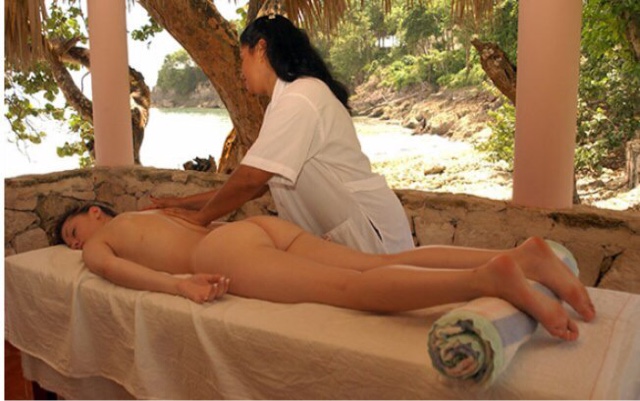
Photo source, a list of top nude resorts
A full-body nude massage merits full disclosure: When I finally managed to schedule an appointment on the naturist massage table last month, I was concerned about “surprising arisings” once I turned over on my back. I needn’t have been. I was so relaxed and the therapist so professional, that all I felt was bliss. If there was a time or two while the therapist was massaging my thighs when a finger happened to brush my scrotum, it was only and exactly because, well, that’s part of my anatomy. It wasn’t provocative, it was comfortable, holistic, healthful, and very very natural.

My massage therapist and her partner therapist did remain clothed during their back-to-back sessions all day long at the arts festival at Oaklake Trails Naturist Park. Maybe they felt that they needed to stay dressed in order to be sure, even at a naturist resort, that people get the right message about nude massages. But in any case it doesn’t matter to you what the therapist is wearing once you’re lying undraped on the table – what matters so wonderfully is that the therapist can massage all of you.* More than just deep tissue, what you feel is a deep peace, a deep openness, a deep sensation of your unified existence as an unfettered entity of the natural world. Do a favor for yourself and your loved ones: experience naturist massage.

*The exception of the genitals generally distinguishes naturist massage from erotic massage.

Skinvitation

If you are a nudist, jump in.

If you are a nudist, a nude-is-not-rude-ist
a naturist beacherist true birthday suit-ist,

If you’re a no-clothes-er, a naked nap dozer,
a barefoot all over from head to your toes-er,

If you’re often naked, your clothing forsake-d,
your moon by the moon lit or by the sun bake-d,

If you skinny dip, then come slide and come slip
in the lake – we can make it a nude hiking trip,
we’ll all bronze as we build our buck naked friendship,
wet and dry, in and out, with no swimsuits to rip.

Jump in!
Jump in!

Skinspiration: Shel Silverstein’s beautifully clever Invitation

Photo source

Naked: A Cultural History of American Nudism

Congratulations to Brian Hoffman, who has turned years of dedicated research and academic presentations into a thorough yet relatively succinct and well organized history of organized nudist movements in the United States, including an epilogue bringing us right up to the present. In Naked: A Cultural History of American Nudism, the author’s focus on legal decisions serves to articulate exactly how it is that organized nudism has influenced, and been influenced by, sexual mores in the US.

Hoffman gracefully traces a chronological trajectory from early 20th-century attempts at organized urban nudism in Chicago and New York, to the escapes to the countryside and the strengthening of the American Sunbathing Association (ASA), followed by the controversies over nudity in magazines and films, on through to the smattering of free beach movements in the 1970s that led to the formation of The Naturist Society.

In his acknowledgements, Hoffman clarifies that he was raised in a nude-friendly household and environment, only to learn as he grew older that not everyone had been raised that way. This discovery, he says, “sparked my interest in the cultural attitudes and anxieties that define nakedness in the United States” (xii), eventually spurring him on to conduct very extensive research at many archives, including the American Nudist Research Library. His study focuses on the on-again/off-again relationship that nudism has had (and continues to have) with eroticism, searching to identify positive aspects of this association (and, yes, there have been positive aspects) alongside the negative: “The coexistence of the erotic and the therapeutic put nudists’ claims to respectability at risk. However, it also allowed the movement to build on the natural settings of its camps, to grow its membership, and to sustain a place in American society and culture” (50).

One of the more obvious overlaps of the erotic and the therapeutic, which Hoffman covers in detail, is the popularity that Sunshine & Health, flagship magazine of the ASA, enjoyed among American troops overseas, and the consequent balance that ASA leader Ilsley Boone sought between promoting the health benefits of social nudity while recognizing the need to sell magazines. “Displaying more graphic images than most pinups but under the guise of a health movement, Sunshine & Health directed troops’ attention away from prostitutes while still maintaining the appearance of respectability” (116). Yet many soldiers who had learned of nudism through the magazine, upon returning to the US as WWII veterans, were rejected at nudist clubs for being “single males.” This, in turn, led the Sunshine & Health editors to begin featuring regular columns about nudism for women, in an effort to balance the genders in the nudist population. In fact, the middle third or so of Hoffman’s study reads like a history of Sunshine & Health and what it represented for the ASA (the American Sunbathing Association did not become today’s AANR until 1994). Another interesting reading of Hoffman’s study is as a history of the American Civil Liberties Union – its foundation and its repeated defense of nudist organizations form an important thread throughout the book. Hoffman deftly analyzes key legal decisions in a way that the reader can appreciate the pioneering liberal thought of justice John D. Voelker in Michigan v. Hildabridle, for example, or the contorted definitions of judge James Kirkland in Sunshine Book Company v. Summerfield.

Hoffman covers skillfully and in depth the contributions of well-known sociologist Maurice Parmelee, first to author a book-length interpretation of nudism in English (Nudism in Modern Life, 1931). Some nudists of his time “maintained that the interaction of naked male and female bodies of all age groups would make sex morally healthy” (74); Parmelee saw eroticism as another benefit of nudism, a movement which “had the capacity to redefine eroticism as a necessary component of a healthy relationship” (80). Parmelee’s “controversial” work was eventually defended in a decision by the US Court of Appeals establishing “that any work with scholarly or academic merit could legally display the naked body” (96).

There are some controversies explained by Hoffman that inevitably lead me to feel frustrated that nudists have to keep fighting the same battles over and over again. These include inter-generational strife, conflict among organizations working for the same end, and general disagreements about how to deal with erotic aspects of nudity (today’s “sex-positive” approach) – in other words, all of these polemics have been going on for at least a century. Another example: Sunshine & Health readers and editors of the 1940s and 50s debated what kinds of bodies to show in the magazine: “Many nudists thought that the display of [only] healthy, young, and athletic naked bodies in Sunshine & Health testified to the physical benefits of nudism and encouraged membership growth. […] By incorporating the attractive and unattractive, the magazine tried to balance its goals of presenting the health benefits of the nudist lifestyle, comforting apprehensive potential converts, and avoiding the ire of censors” (114). And just what, exactly, is attractive, and to whom? In fact, the “support of a gay readership furthered the nudist goal to frankly display the naked body of both sexes and pushed the nudist movement to challenge the heteronormative boundaries of modern sexual liberalism” (119). But nudism continued to provoke controversy, and Hoffman illuminates the often painful yet important-to-acknowledge conflicts of its history. Particularly regarding the inclusion of gay and lesbian nudists, and of nudists of a phenotype other than “white,” “American nudists protected themselves from legal troubles by conforming to homophobic, racist, and domestic heterosexual ideals” (132). At least, arguably, there has been as much progress in the early 21st-century on inclusivity among nudists as there has been among the general US population.

Although the ASA was less willing to accommodate diversity–whether of population or of venue–The Naturist Society under the leadership of Lee Baxandall welcomed a multiplicity of viewpoints and approaches toward the legalization of nudity at public beaches and parks. Hoffman shows how the two initially opposing organizations eventually learned to work together while maintaining different areas of concentration, at least officially, in the wake of the 1958 Supreme Court decision that was a win for nudism but “unintentionally created a market of nudist magazines that promoted sexual display far more prominently than they promoted the movement’s principles and ideals” (202-03), coinciding with the beginning of the Southern California porn industry.

Ultimately, “The growing public acceptance of the naked body at newsstands and in theaters meant that the movement’s continuing promotion of health, nature, and family no longer seemed necessary or relevant to the general public. Nudist leaders nevertheless continued to cling to the image of respectability that had helped the movement defeat the censoring of its magazines and films” (207). The sexual revolution’s relation to free beach movements was fundamental, yet difficult to locate in official nudist dogma. Even Baxandall, initially aligning The Naturist Society ideologically with organized feminism, showed resistance to adopting stances he felt to be too radical, such as an approach to nude rights bolstered by the Fourth Amendment. One caveat here is that while Hoffman does devote attention to nudist films and their approximations to the exploitation genre, he does not cite Mark Storey’s work Cinema Au Naturel: A History of Nudist Film, which I think many would argue to be a fundamental source on that topic.

Where does Hoffman’s work stand in relation to other scholarship on nudism? Mark Haskell Smith’s recent Naked at Lunch travelogue, which I reviewed here, is what’s called a “trade book” – Smith conducted plenty of research, but in a trade book the research doesn’t have to be handled or amassed in the same way as in an academic treatise, which is what Hoffman’s work is. Yet Hoffman’s style is also very readable, with his salient points made very clearly, and his topic – limited basically to the 20th-century US – is not as sprawling as what is covered in Cec Cinder’s massive The Nudist Idea. Hoffman’s study is more akin in style to Ruth Barcan’s Nudity: A Cultural Anatomy, perhaps, and other academic books that address representations of the “body politic” that challenge societal, legal, governmental, and ecclesiastical structures.

Hoffman has written THE cultural history of United States nudism, and I highly recommend his book for its entirely cohesive, thorough, and illuminating historical portrait of the topic. 331 pages, 29 illustrations (b&w).

Naturist Lodge near Guadalajara

In my previous post, I reviewed the hot-off-the-press Naked at Lunch by Mark Haskell Smith. I’d like to return to the book for a moment as a way of introducing this post. Smith, in a chapter about the future of social nudism, quotes a well-known voice of naturist philosophy, Mark Storey, on a rather pessimistic note: “California is becoming more and more Hispanic, and that’s going to have an impact on cultural values. It’s going to be a struggle for naturism because it just isn’t a part of Latin American culture” (p. 265).

I agree with Storey regarding everything else he says in his interview with Smith, and I hold great respect for all his work at TNS, as a naturist activist, and as a widely recognized and highly prolific scholar of naturism; however, I disagree with him on this particular point. There are certain nations that are quick off the lips of naturist historians: Ancient Greece, Germany, France, the UK, the US, maybe India. But all countries and regions have traditions related to social nudity. Where there are humans, there are ways of practicing nudity socially, and one of my aims in this blog is precisely to highlight naturist traditions and ideas from those “other” regions, especially Latin America. Click on the label link “Americas” for more than a dozen posts on this blog related to naturism in Mexico, Brazil, Colombia, Peru, and Venezuela. Why is it that Spencer Tunick can marshal his largest crowds for nude photo shoots in Mexico, of all places? Mexico, Spain, Brazil, Portugal, and other Catholic countries are in some ways much less hindered by religion in their attitudes toward social nudity than the US with its prudish Puritan-tinged prurience, its “illogical legal system made bitter by a dash of Puritanism,” as Smith describes it (Naked at Lunch p. 256).    

I can concede that some areas of Latin America are only now getting started with official naturist organizations. Mexico, for example, has a brand new naturist organization, the Federación Nudista de México, based in Mexico City and just starting to grow into a countrywide umbrella organization for naturists. This is great. It’s important for Mexicans to be able to organize their own groups related to social nudism. And yet, I notice that the AANR regions page has divided up the Mexican states and added them rather specifically yet nonchalantly to several US regions. For example, the AANR-Southwest description declares: “Oklahoma, Texas, Louisiana, and Arkansas. Mexico: east of a north-south line drawn through Juarez except the three eastern-most States.” Does anyone know what’s going on? The Treaty of Guadalupe Hidalgo was signed in 1848, for crying out loud. In fact, not just California, but all of the US has a growing Latino population. It’s a good idea to understand new social nudist initiatives being promoted by Latinos in the US as well as in Latin America and elsewhere, since all people of a certain age who use social media, regardless of ethnic background, can be exposed to information about social nudist clubs, venues, activities, and most importantly, attitudes.

And so with that preamble, here is some specific information about a recently opened naturist locale in Mexico and its incorporation of an ancient Mesoamerican way of being nude socially:

La Hermosura (The Beauty) is the name of a new naturist retreat and spa not far from Guadalajara, Mexico’s second-largest city and capital of the state of Jalisco. Designed as a clothing-optional bed-and-breakfast, La Hermosura is a small property, recently developed, with panoramic views of the mountain range la Sierra Norte de Jalisco.

Open view of the Sierra Norte de Jalisco

Perhaps the property’s most unique feature is that it was designed around the practice of the temazcal, a Mesoamerican kind of sweat bath (photos below). I wrote a post a few years ago about the tradition of the temazcal. The temazcal (tay mahz KAHL) at La Hermosura was commissioned and constructed according to all the traditional procedures, including the spiritual ones, such as specific offerings placed underneath the “abuelitas” (stones), and the sounding of the conch shell to the seven directions.

The proprietor of La Hermosura, Coyohtli Petlauhtinemi (a Nahuatl name meaning “Path of the Naked Coyote”), shared a few images with me to include here. Open-air group exercise, such as the clothing-optional sun salute below, are great ways of introducing people to the benefits of social nudism.

The temazcal’s sweat-inducing enclosure is beneficial for many kinds of ailments or conditions, ranging from respiratory infections to hypertension to menstrual cramps. In addition to the carefully calibrated temperature inside the dome, there are ritual elements such as synchronized movement, sound, and aroma that all have their functions to fulfill in the ceremony.                           
Sometimes the proprietor and his spouse sponsor special invite-only events, such as a temazcal Noche de los Muertos (below).

On the site for the Federación Nudista de México, you can see that nude temazcal events are popular and sponsored at several locations including the Mexico City area. Mexico’s answer to the Scandinavian sauna, the temazcal is a terrific example of an ancient practice that is being recuperated as a unique way of introducing a new generation to social nudism.

Naked at Lunch

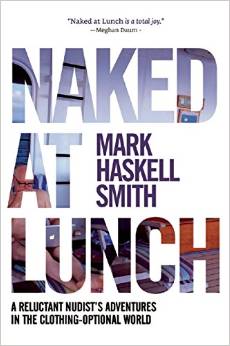
Mark Haskell Smith’s exploration of the world of social nudity, Naked at Lunch, is an important book for you, no matter where you are on the nudity-textile spectrum. Why? Because he wrote about it from the perspective of a “reluctant nudist.” His tone throughout the book is refreshing – not skeptical, really, but certainly objective. It’s the tone of one who is willing to explore, to seek out empirical answers, one who is willing to question societal practices and customs regarding states of dress and undress. And on his many adventures from California to Florida and from the Caribbean to the Mediterranean, Smith finds that most of the time, naturist ideas are convincing.

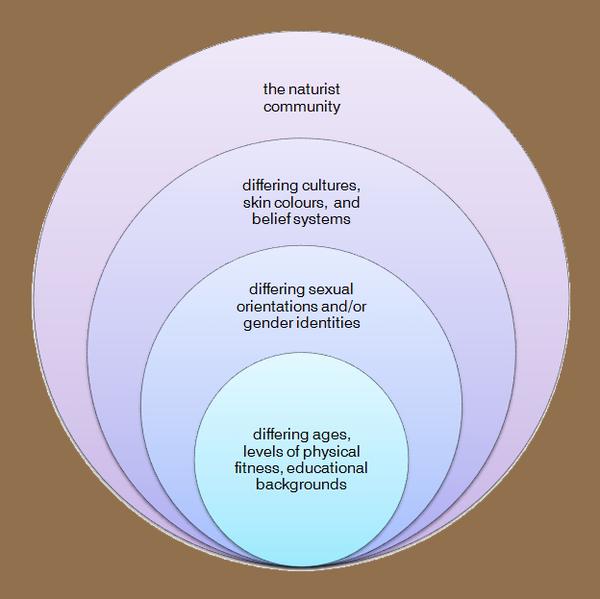
How does Smith, as a “reluctant nudist,” learn what these naturists ideas are? He researches naturists of the past, and he interviews naturists of the present. The reader of Naked at Lunch learns concisely about early nude societies such as Charles Crawford’s short-lived Fellowship of the Naked Trust; early 20th-century European nudist pioneers such as Richard Ungewitter and Emile Armand and their compelling manifestos; and a wide-ranging alphabet soup of organizations and events that encapsulate concrete moments in the history and expression of social nudism: AANR, TNS, YNA, WNBR, WNGD, NEWT, OCTPFAS, even FEMEN and FFF. He profiles the careers and legacies of TNS founder Lee Baxandall, for example, as well as early ASA (AANR) leader Isley “Uncle Danny” Boone. He interviews renowned TNS naturist philosopher and writer Mark Storey, YNA co-founder Felicity Jones, Naktiv founder Richard Foley, and Bare Necessities Travel co-founder Nancy Tiemann. He cites published body theorists like Ruth Barcan and Mario Perniola. He peruses the pages of naturist history at the American Nudist Research Library at Cypress Cove. He compares and contrasts the laid-back, family-friendly tranquility of Vera Playa to the naturists-vs.-swingers tensions of Cap d’Agde. He even interviews San Francisco district supervisor Scott Wiener about the nuances and ironies of the recent and much decried ban, led by Wiener, on public nudity in that city. The graphic below, by Björ (@IbanSaram), can be used effectively to illustrate the scope of Smith’s interactions across a spectrum of attitudes and activities related to social nudism.

Graphic courtesy Björ (@IbanSaram). Produced independently of this post, used by permission.

Here is an example of Smith’s writing, from his frank assessment of his first social nudist experience. It’s a moment when he is apprehensive about social nudity, about being a single male, about where to look, even about having slathered too much sunscreen on his now-shiny penis… and yet:

“I went back to my chair by the pool [at Desert Sun Resort]. Was this a more enjoyable experience than sitting by a pool and reading with a swimsuit on? If I’m honest, I have to admit that it was. It felt good to let the sun and the warm desert breeze dry my skin after a dip in the water without the feeling of clammy fabric sticking to my body. Admittedly it was strange to look around and see naked people, but they were doing a pretty standard version of what people on vacation do, reading or snoozing or drinking cocktails and laughing–all in a nonsexual way, naturally. Nobody gawked, nobody said anything offensive or racy, it was all very proper” (p. 45).

In this passage, he asks himself a key question and then responds with honesty – this is a technique he employs throughout the book and, as I say, he almost always comes to the conclusion that naturist practices are laudable and correct.

Smith begins and ends the book with an account of his experience on a nude cruise. He builds suspense with frequent references to his wife being singularly unimpressed, or slightly bemused, when learning via Skype of his naked adventures… until she too, finally, aboard the cruise, decides to participate in social nudism, slowly at first and then more wholeheartedly. It is a strong endorsement. And yet in the final brief chapter, even after asserting that nudists are brave for simply admitting that they enjoy the sensations of the elements on their bodies, and even after asserting that society needs to grow up, accept nudity, and designate more areas for nude use, Smith still states, “I wasn’t a nudist when I started this journey and, if I’m being truthful, I’m not a nudist or a naturist or an anti-textile now. Not that I think there’s anything wrong with those labels. They’re just not my scene” (p. 297). But he does add the caveat that his attitude has definitely changed–to something like nude-friendly, and that even though he won’t go out of his way for a nude experience, he says, “if I ever find myself on a secluded beach somewhere, or if I’m hiking through the mountains and there’s no one around, or if my wife wants to sit outside at night and share a bottle of wine in the buff, then, if the weather’s nice, fuck yeah, I’ll be taking my clothes off. It feels good” (p. 298). These are the last words of the text – a simple and universal truth, the grand conclusion that we naturists strive to help people reach: it feels good.

I appreciate Smith’s playful style and ear for assonance in describing the process of reorientation with one’s body, with others’ bodies. He clearly relishes the chance to deploy words like buttocks and penis with the frequency that the subject matter affords. I also appreciate his placement of the Naked European Walking Tour episode right smack in the middle of the book, with a small reprise at the end: it’s an episode rich in a range of emotions and attitudes toward nudity–something of a panoramic view from an Alpine summit–and his respect for Foley and his fellow hikers is palpable. Mostly I appreciate such a well-written, well-researched, fun-to-read and up-to-date book about a topic I hold dear. I highly recommend it. 

Nude Prophets Old and New

In light of the upcoming release of The Prophet, an animated Hollywood version that tells the story of Kahlil Gibran’s 1923 classic, I’m happy to have found an original Nude Scribe piece from 2012 that I thought I had lost during a site reformatting. So here is the post, like a blast from the past. It highlights Gibran’s references to nudity in his writing as well as in his illustrations, and describes a very unique adaptation of The Prophet staged by a naturist theater group in Brazil.

One of Gibran’s original illustrations for The Prophet

Nudity is often a powerful metaphor for truth. It is not the only such metaphorical relationship that nudity evokes, but it is certainly one of the strongest. Sometimes nudity is truth’s literal manifestation, sometimes it is only its metaphor; but in either case nudity can lend the power of truth to what may be said by a nude speaker. 

This is especially the case when the nude speaker is a prophet, even though he may be derided as a lunatic in his textile society. In the Old Testament, for example, the prophet Isaiah wandered unclad and unshod for three years and was ignored or ridiculed by his people.

Almustafa is the protagonist of The Prophet (1923), a brief book of prose poems by early twentieth-century Lebanese-American poet Kahlil Gibran. In contrast to Isaiah, Almustafa doesn’t prophesy nude nor wander through the wilderness without clothing. But he speaks often and favorably of nudity – both literal nudity and metaphorical nudity. From the section of The Prophet called “Freedom,” here is an example of the metaphorical use of the term “naked”:
You shall be free indeed when your days are not without a care nor your nights without a want and a grief,
But rather when these things girdle your life and yet you rise above them naked and unbound.” (47-48)
Rising above your problems “naked and unbound” can obviously have a literal meaning, too, especially if you are a nudist! The following two examples, from the section called “Laws,” have meanings that can hover between metaphorical and literal nudity, depending on context:
On hypocrisy and laws made to be broken: “What of the old serpent who cannot shed his skin, and calls all others naked and shameless?“(45)
On escaping from the tyrannical use of law: “And who is he that shall bring you to judgment if you tear off your garment yet leave it in no man’s path?” (46)
In the naturist community, Gibran’s most-loved lines come from the section on “Clothes.” In this section, quoted in full below, even though the word “naked” is not mentioned (“bare” is), it is easy to understand that the prophet is speaking quite literally about the desirability of going naked:
And the weaver said, Speak to us of Clothes.
And he answered:
Your clothes conceal much of your beauty, yet they hide not the unbeautiful.
And though you seek in garments the freedom of privacy you may find in them a harness and a chain.
Would that you could meet the sun and the wind with more of your skin and less of your raiment,
For the breath of life is in the sunlight and the hand of life is in the wind.

Some of you say, ‘It is the north wind who has woven the clothes we wear.’
And I say, Ay, it was the north wind,
But shame was his loom, and the softening of the sinews was his thread.
And when his work was done he laughed in the forest.
Forget not that modesty is for a shield against the eye of the unclean.
And when the unclean shall be no more, what were modesty but a fetter and a fouling of the mind?
And forget not that the earth delights to feel your bare feet and the winds long to play with your hair.” (35-36)
These verses have a history of devotion in the naturist community because on the one hand they so unequivocally reject societal needs, such as modesty, that are constructed around clothing, while on the other hand they so joyfully present the wholesome freedom of natural nudity. In his writings in general, Gibran treats nudity as a desired state in which to live, a state closer to the natural harmony of the world. And of course, the author makes this case not just in words but also in a dozen nude images, drawn by his own hand (examples above and below). The Prophet is another resounding triumph for the inclusion of naturism as part of a profoundly philosophical worldview. For many people of a certain age The Prophet is nothing new, but if you have not yet read it, you should. It’s a terrific and quick read.
From left: Illustration from The Prophet (Kahlil Gibran), Photograph by Jorge Bandeira from Nuances
The recent performance of Gibran’s work that I want to feature here was staged by Jorge Bandeira, a Brazilian activist, actor, playwright and director, and founder of the naturist group GRAUNA (Grupo Amazónico União Naturista). Bandeira designed a performance event called Nuances based on The Prophet and some of Gibran’s other work. The title Nuances holds the same meaning in Portuguese as it does in English, with the added effect that the initial letters of the word “nuances” mean “nude” (“nu” is the masculine form, “nua” the feminine). The performance took place over two nights in 2010 in Manaus, capital of Amazonas state, Brazil, and was designed and produced by Bandeira along with the Coletivo Artístico Graúna (members of GRAUNA).  
The Nuances “happening” included a gallery of Gibran’s poems and illustrations alongside a series of nudes, photographed by Bandeira and also Macarena Mairata, that imitate or elaborate on Gibran’s illustrations (see side-by-side example above). Attendees to the event watched a live performance featuring five nude actors who interpreted scenes from the photographs and from Gibran’s drawings while also taking turns reading Gibran’s poems. Because they were moving around in front of a screen showing slides of the various illustrations by Gibran, Mairata, and Bandeira, the actors’ bodies also became screens (see example below).
The Nuances event embodied a holistic relationship with nature, literally as well as metaphorically, just like Gibran’s main messages in The Prophet.
Image from Nuances performance, photo by Jorge Bandeira
The gallery of images became a traveling exhibit that was set up in other locations in Brazil. Bandeira continues to be a naturist activist through theater, poetry, and the group GRAUNA. (I featured a text of his in an earlier post on the Brazilian naturist pioneer Dora Vivacqua.)
Gibran, Bandeira: Prophets and pioneers both, honored speakers and presenters of the naked truth.
Here is the trailer for the new The Prophet, to be released in the US in August. Will it contain Gibran’s original language regarding clothing and nudity? To be determined…